
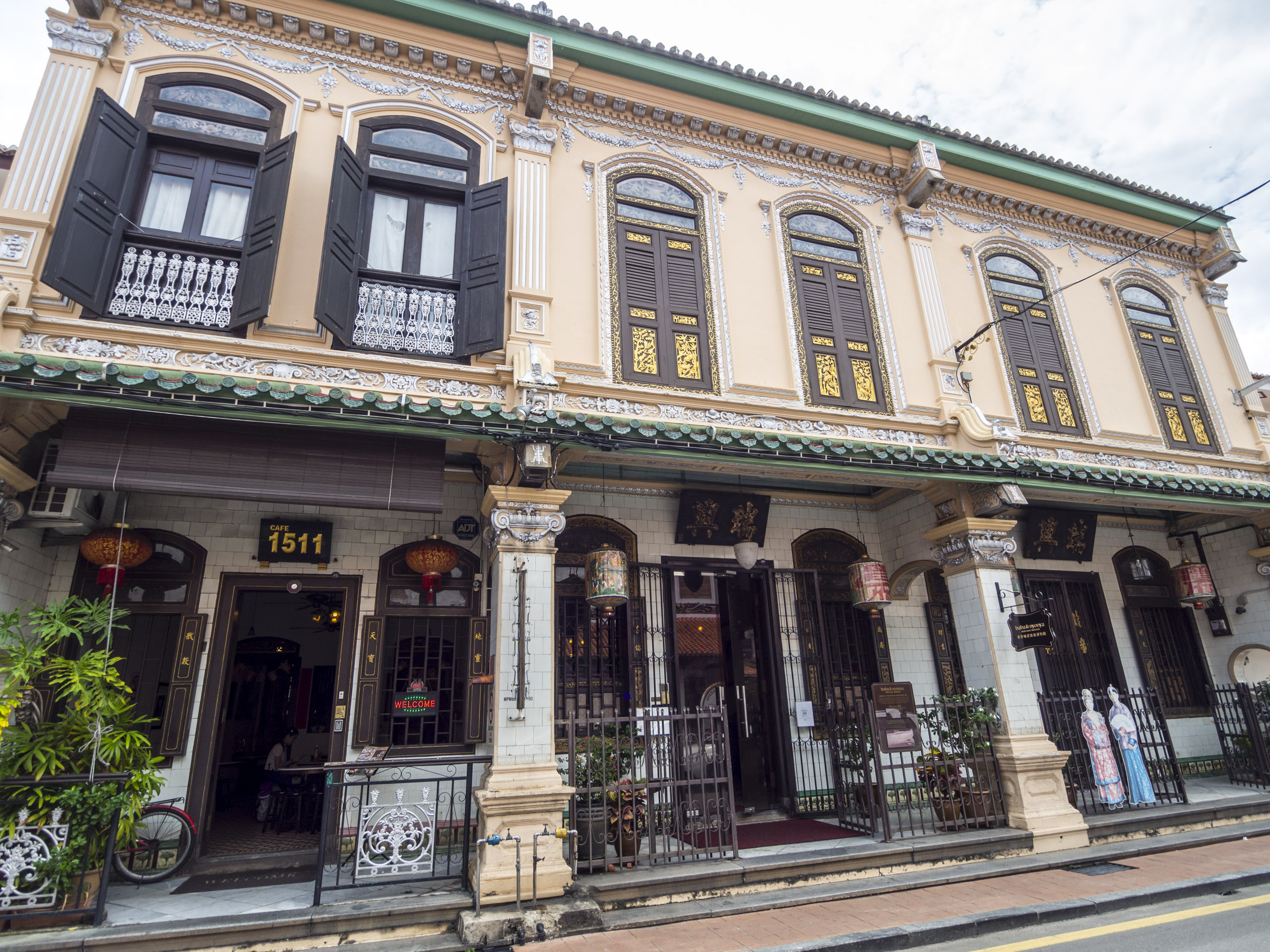
Azuladnan, 2 April 2017, CC BY-SA 4.0 via Wikimedia Commons. Unchanged historical exterior photograph, responsive display only. It does not show the rooms discussed or establish today's entry arrangements.
An address is not the same thing as a household's use of space
The museum identifies numbers 48 and 50 as the main homestead and number 52 as the servants' quarters. That is a useful first distinction: adjacent buildings can belong to a connected household while serving different people and functions. Avoid reading the frontage as if every doorway led to the same kind of domestic experience.
Before listing furniture, ask what each room enabled someone to do. Receiving a visitor, preparing food and maintaining family remembrance are not interchangeable activities. This changes a visit from collecting decorative details to asking how the home organised social relationships. Use the museum's labels or a guide's explanation to test your interpretation rather than treating a photograph as evidence of everything that happened there.
When asking for a quote
Send hotel, passengers, luggage and return timing together
Complete details make it easier to check vehicle fit, rest stops and timing without unnecessary back-and-forth.
The reception hall raises a question about access
In its account of this household, the museum describes Thia Besar as the formal reception space: men were admitted there, while women could view proceedings from Thia Gelap. Attribute that description carefully. It concerns a historical social boundary in this house, not a present-day instruction that women visitors should stay outside.
Ask what a formal room communicated to a guest and what it concealed from that guest. You do not have to admire a restriction to recognise that it shaped daily life. A thoughtful family conversation can include both the craftsmanship on display and the unequal access described by the museum. Do not invent an individual woman's experience or assume every resident accepted the arrangement in the same way.
The kitchen offers a different view of the home
The museum presents Dapuh, the kitchen, as a space for family, work and social life. Rather than treating it as a less important room after a grand reception hall, ask which everyday tasks supported the life represented elsewhere in the house. Food preparation involves labour as well as family memory.
One suggested comparison is between something intended to impress a visitor and something needed for repeated daily work. Describe the object you can actually see, then ask for its documented use. This is an observation prompt, not a promise that a cooking demonstration, particular utensil or food tasting will be available. Do not touch a surface or object simply because it looks familiar.
An ancestral space is not just another decorative corner
The townhouse account connects Thia Abu with the family's ancestral continuity. That offers a different question from the reception hall: how did the home connect living relatives with earlier generations? Keep that question respectful and distinguish the museum's historical interpretation from anything you happen to observe during your visit.
A room associated with remembrance is not evidence that a ritual will be performed for visitors. Do not stage a photograph, move objects or assume that every practice described in a history text is part of today's tour. Ask staff about photography and behaviour before entering any sensitive space. If a detail is not explained, leaving it as a question is better than supplying an attractive but invented meaning.
Choose depth rather than another museum comparison
This room-by-room question suits visitors curious about domestic history, social roles and how a house worked. If the group's real question is which museum to choose, use our museum-choice article instead; it compares the Baba Nyonya and Cheng Ho options at a broader level. The two questions need different answers, and neither requires pretending that one museum is best for everyone.
For this visit, let each person choose one space and finish a short sentence: this room helped someone to __, and our evidence is __. A child can describe a practical task; an adult may ask about status or exclusion. It is a suggested conversation, not a guided activity sold by the museum. Keep the pace appropriate to interest and rest needs rather than promising a fixed visit duration.
Confirm the visit and transport as separate arrangements
Check the museum's current visitor information before committing to a particular entry or tour. This historical-space guide does not confirm today's admission, opening, accessibility or photography rules. The exterior photograph is from 2017, not proof of the current entrance or vehicle waiting place.
For a Singapore-to-Melaka enquiry, say whether the house museum is your main stop or a visit after hotel arrival. Use the route and hotel-attraction pages below to confirm the actual transfer scope and collection arrangement. A car booking does not automatically include museum tickets, a guide or permission to wait outside the frontage. Sources were reviewed on 27 October 2026.